
British Vogue August 2026
The Bigger Picture
Gina Tonic delves into this question in a fascinating feature about how the body positivity movement seemed to be making very positive strides toward popular acceptance everywhere but that recently (due in part to less progressive political movements and the proliferation of GLP-1), culturally we've taken a step back and Gina's reflects on her own personal experience with this. When a Vogue editor wrote me, “We love your work and feel like it really aligns with Gina's viewpoint.” I knew this artwork was important at this moment more than ever.
“What does the waning of body positivity mean for a writer whose ideas and career were shaped by the fat acceptance movement? How do i stay hopeful, asks Gina Tonic, and love my body in a world obsessed with thinness? ”
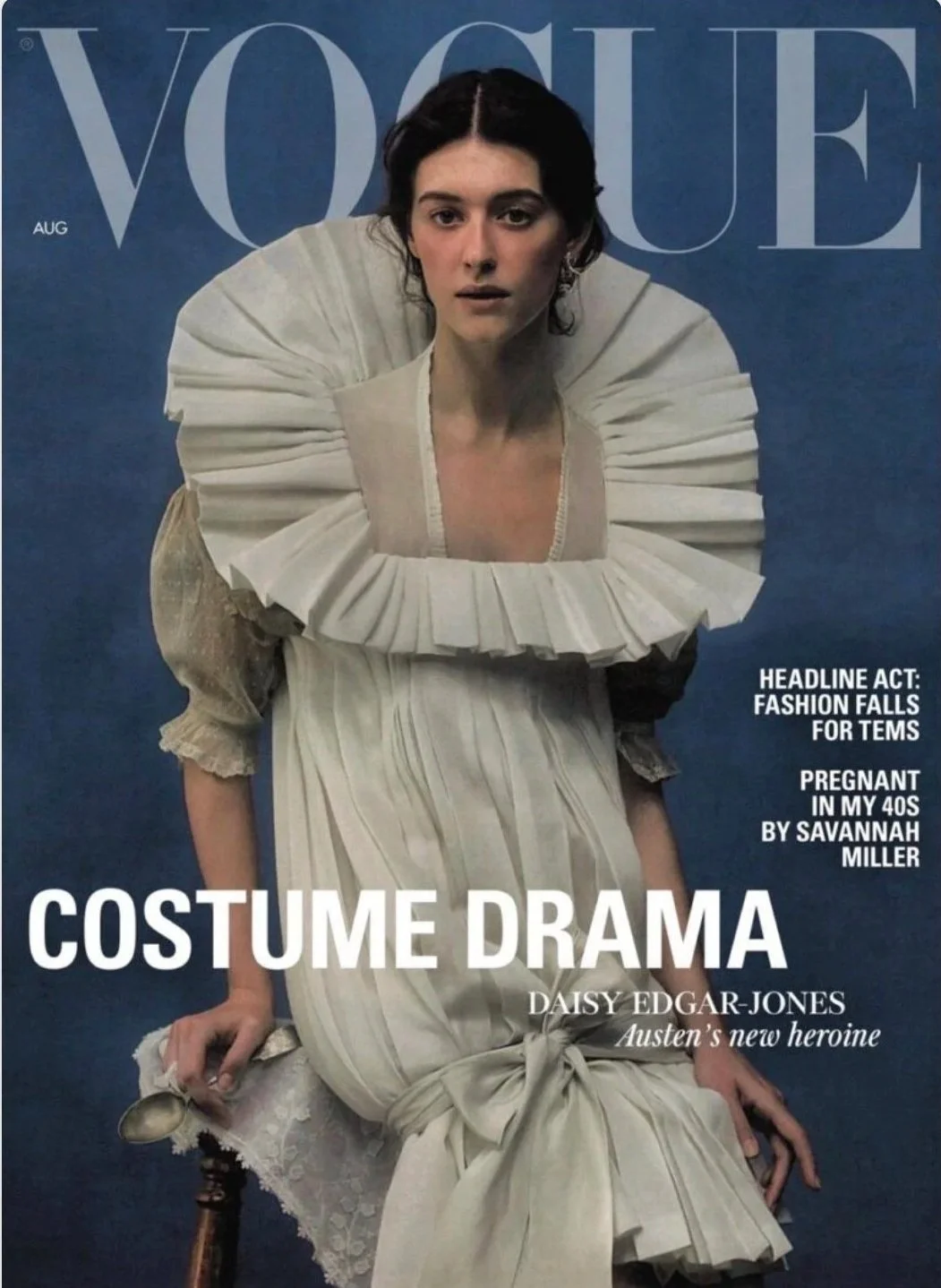
Photography courtesy of Conde Nast
Interestingly, I never considered my paintings to be "body positive," "body neutral," or political. To me, they are simply paintings of fat women existing—sitting, reclining, being. And yet, they evoke a wide range of emotions and reactions.
It was art writers and viewers who labeled my work as body positive. Looking back, however, I realize I created these paintings as an unconscious act of rebellion that had been building over many years. I used to fantasize about painting a larger-than-life fat woman as an unapologetic response to the people and experiences that constantly reminded me I couldn't simply exist as I was.
I didn't choose this body, yet I was continually expected to fight for it—to defend it, justify it, and even apologize for having it. Growing up in the 1980s and 1990s, I internalized those messages, and they followed me well into adulthood.
In her article, Gina explains that this struggle is far from a modern, passing trend. She notes that while the body positivity movement is often traced back to the late 1960s in America, its foundations were laid throughout the 1950s, when post-war diet culture exploded and thinness became increasingly tied to morality, desirability, and social value.
Looking back now, I understand that my paintings were never just about the figures I was depicting. They were about claiming space, refusing shame, and imagining a world where simply existing in a larger body required no explanation at all.
“The phrase “body positivity” – before it was diluted by brands into generic self-love messaging – was rooted in activism by marginalised people speaking about survival in bodies that society deemed unacceptable.”
Who knew that a fat woman in repose, a fat woman minding her own business, a fat woman simply eating and enjoying herself, could stir up so much emotion—both hostile and profoundly healing. Thankfully, the healing has been the greater force.
My paintings are a looking glass. We begin as voyeurs, peering into the world of a woman who is simply existing. But then the reflection shifts, and the viewer begins to see themselves in her image. We recognize our own bodies in hers. We borrow her calm. We sense emotions we may never have been able to name but have always carried.
The woman I paint has been called brave, body positive, even inspirational. But I don't think that's what she is doing. What she offers is permission—permission to exhale, to take up space, and to simply be.
For those who experience discomfort when looking at her, I wonder what that discomfort is asking them to examine. After all, what they are seeing is simply a real woman: unedited, unfiltered, and unapologetically present. That this alone can feel provocative says more about our culture than it does about the painting. It's one of the reasons I choose titles like Large Bodies Deserve Large Paintings.
For a brief moment, it felt as though we were making progress. As Gina writes:
"Six years on, body influencers are everywhere. Except many plus-size influencers have converted to becoming weight-loss influencers instead. The aspirational fat woman has quietly disappeared and in her place is the woman documenting her transformation away from fatness. The 'before' and 'after.' The shrinking body. The 'health journey.' The world has not just moved on from body positivity—it has rebelled against it."
Reading those words, I couldn't help but think about my own work. The women in my paintings are not before or after. They are not becoming. They are not projects to be fixed. They are complete exactly as they are, asking nothing more than the freedom to exist without explanation.
“Fat-shaming crept back alongside alt-right politics…
our bodies are expected to reflect obedience”
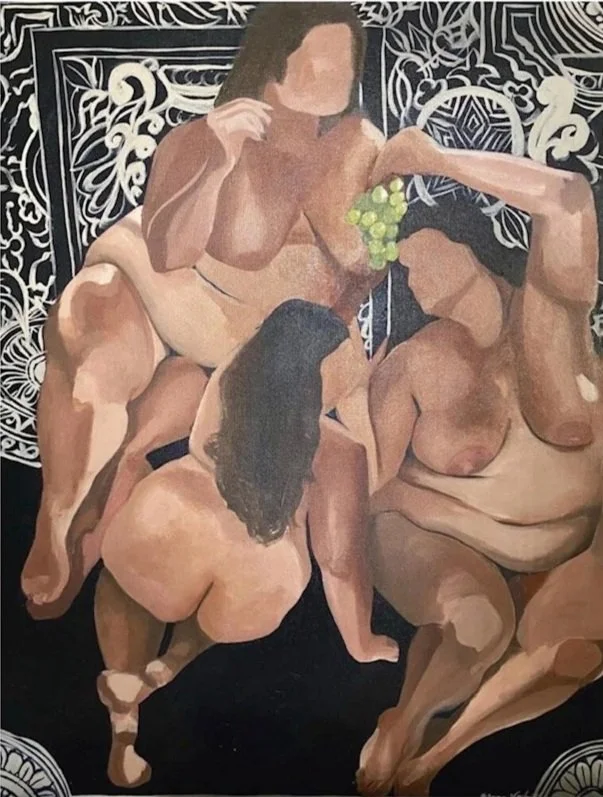
This painting titled Poise, Patience, and Perseverance graces the pages of British Vogue August 2026.
Gina asks, "What happens next for fat women? Fat activists? Me?" Knowing the history of the movement, she writes, "and that fat liberation has peaked when traditionalism takes hold of the mainstream, makes me feel confident that we are around the corner from another uprising against thin beauty standards. We've long accepted that feminism comes in waves, and it seems body positivity does too. While we wait, I can take solace in being countercultural in a time when culture is skewing heavily to the right."
She goes on to observe, "I don't think it's a coincidence that as the world becomes politically more hostile, exclusionary and punitive, our bodies are increasingly expected to reflect discipline, control and obedience."
Those words resonate deeply with me.
In my studio, I continue painting fat women simply existing in a society that is constantly trying to discipline, control, and diminish them. My work is not about making a statement for the sake of provocation; it is about insisting that these bodies deserve to be seen without qualification or apology.
Our bodies are not a trend. They are not a political fad to be embraced one decade and rejected the next. They have always existed, and they always will. They will not be suppressed, and they will not be erased.
“In my studio, I will continue painting fat women simply existing. At a time when the world demands smaller bodies, quieter voices, and greater conformity, my paintings insist on something radical: presence. Our bodies are not a trend. We are not a phase. We will not be erased.”
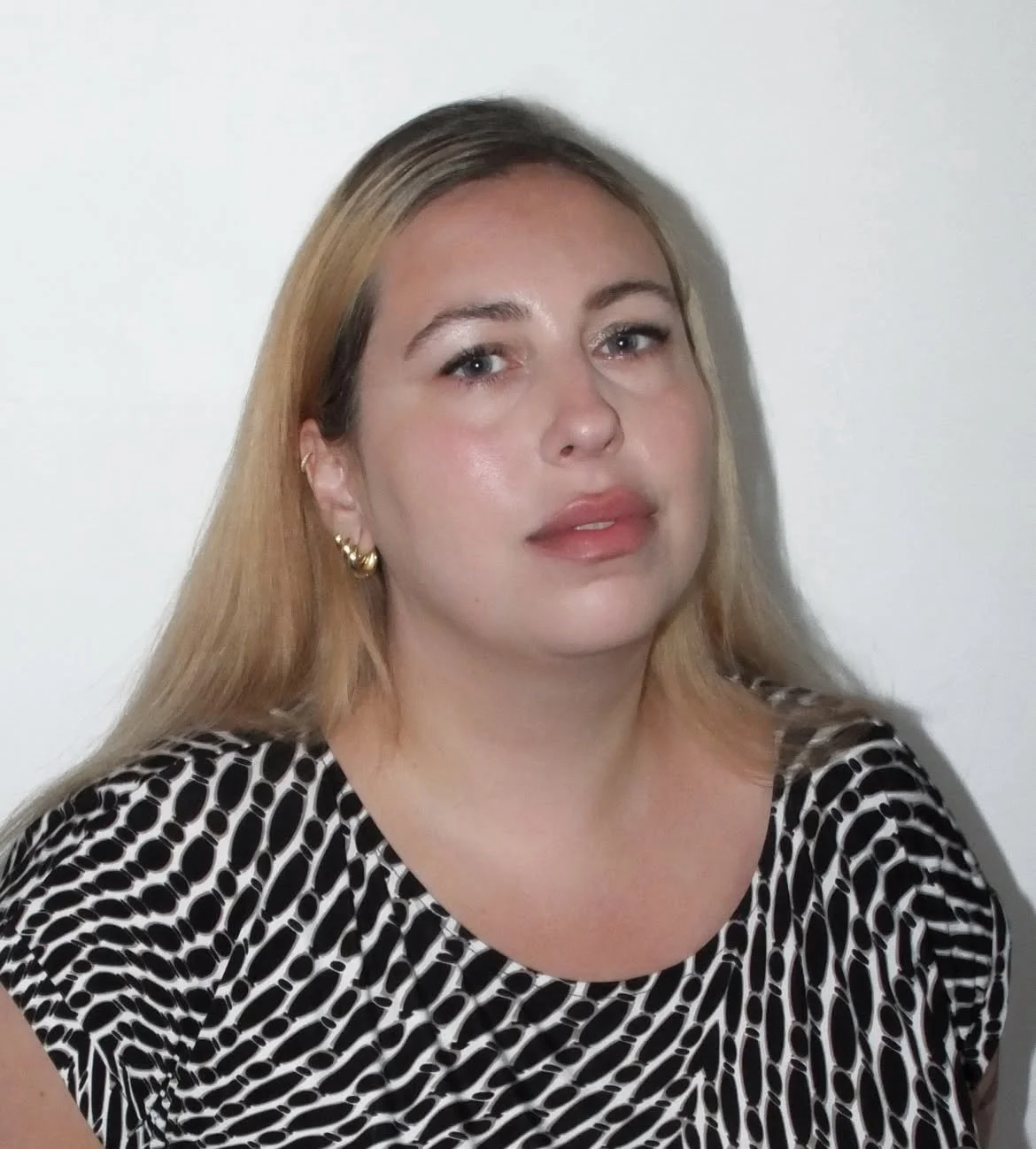
Gina Tonic
Gina Tonic is a culture writer from South Wales who has been named “the writer and editor empowering a generation of fat babes” by Dazed Beauty.
She's the senior editor and podcast host for Polyester Zine and was named as a part of Generation Change by MTV.
Her first book, Greedy Guts, came out this year.
Thank you to the editors at Vogue UK for spotlighting this topic and this art. See this painting and Gina’s entire feature in British Vogue August 2026 edition.