2026 Art Release
Resting Venuses
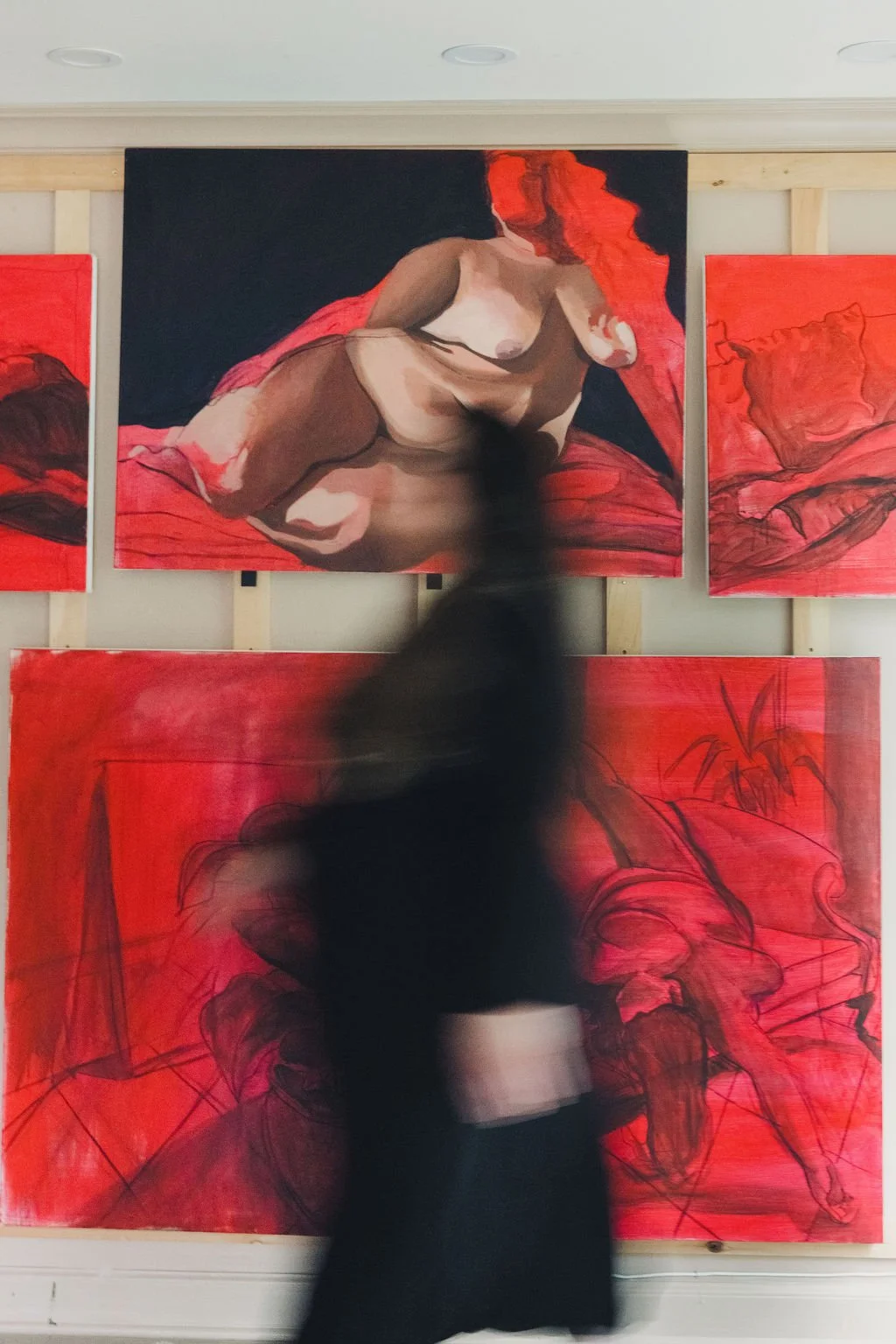
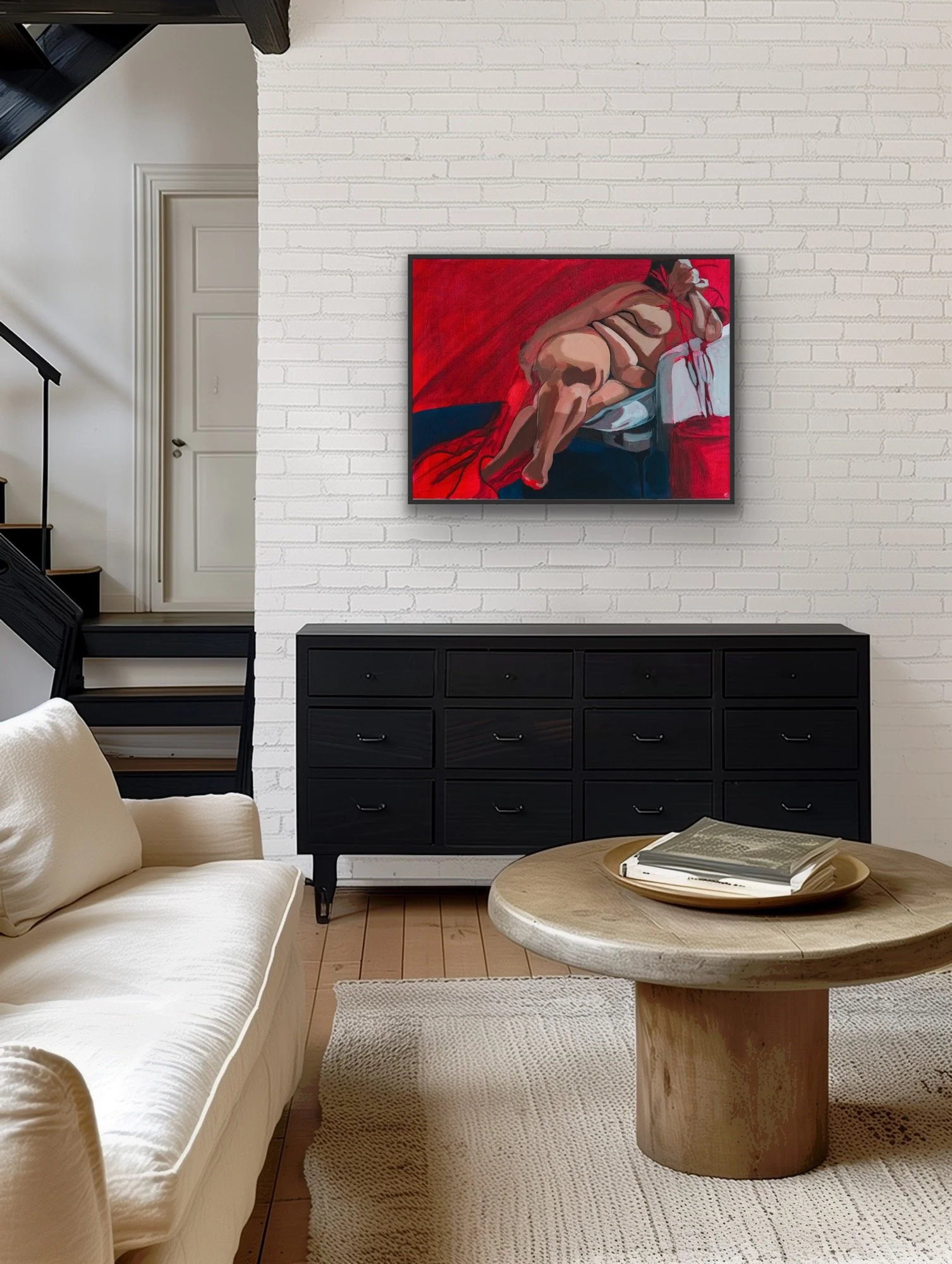
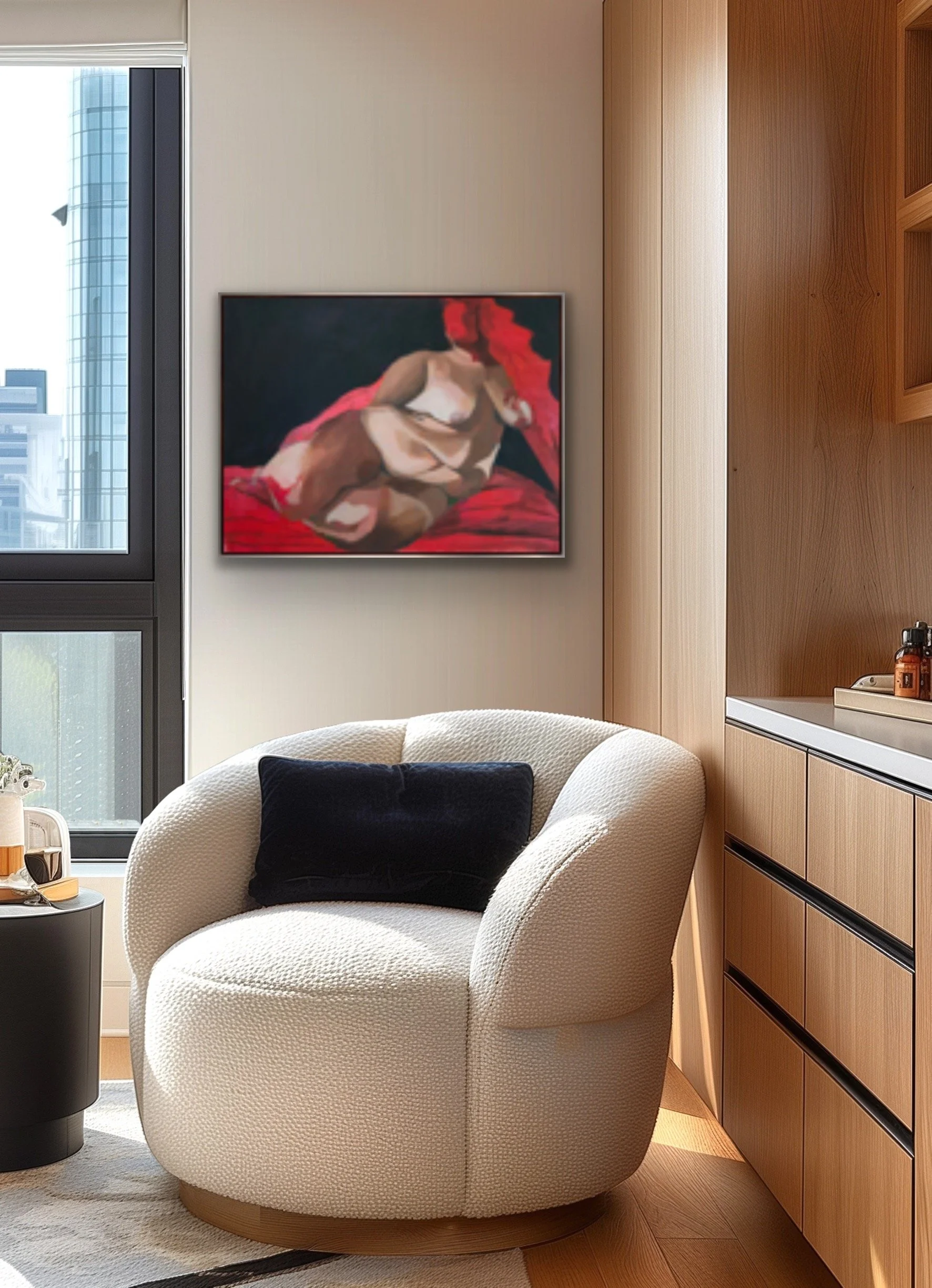
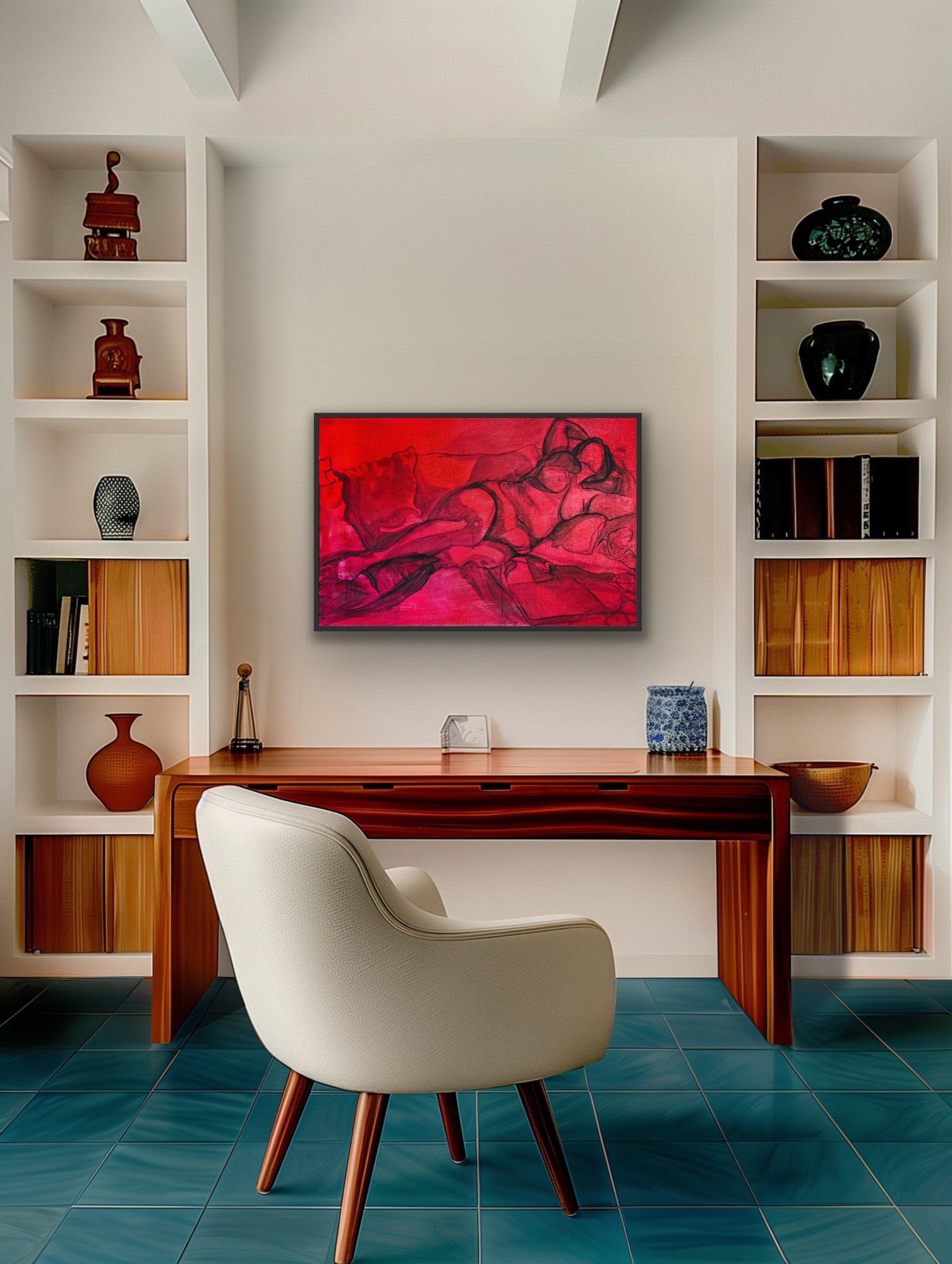
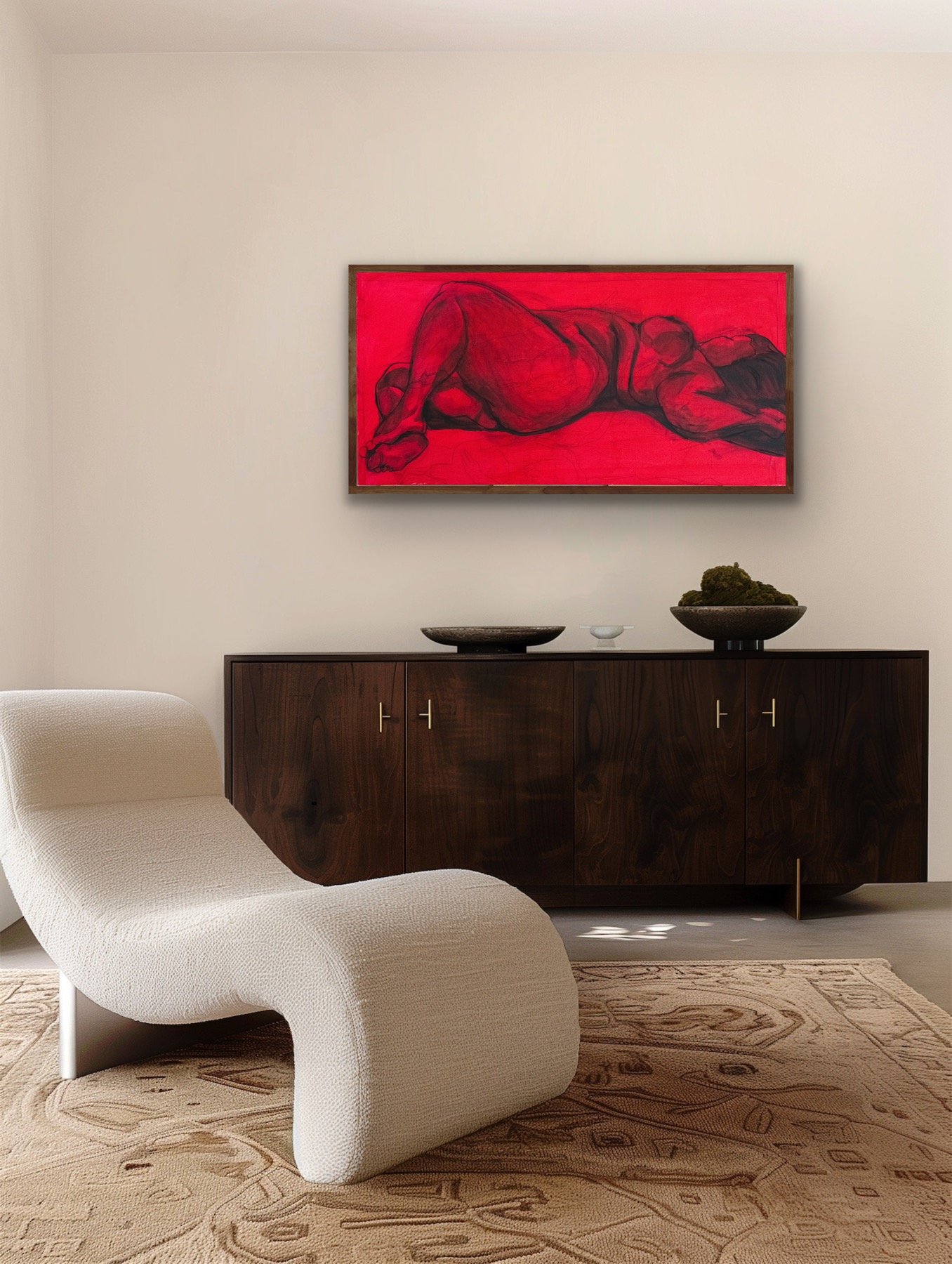
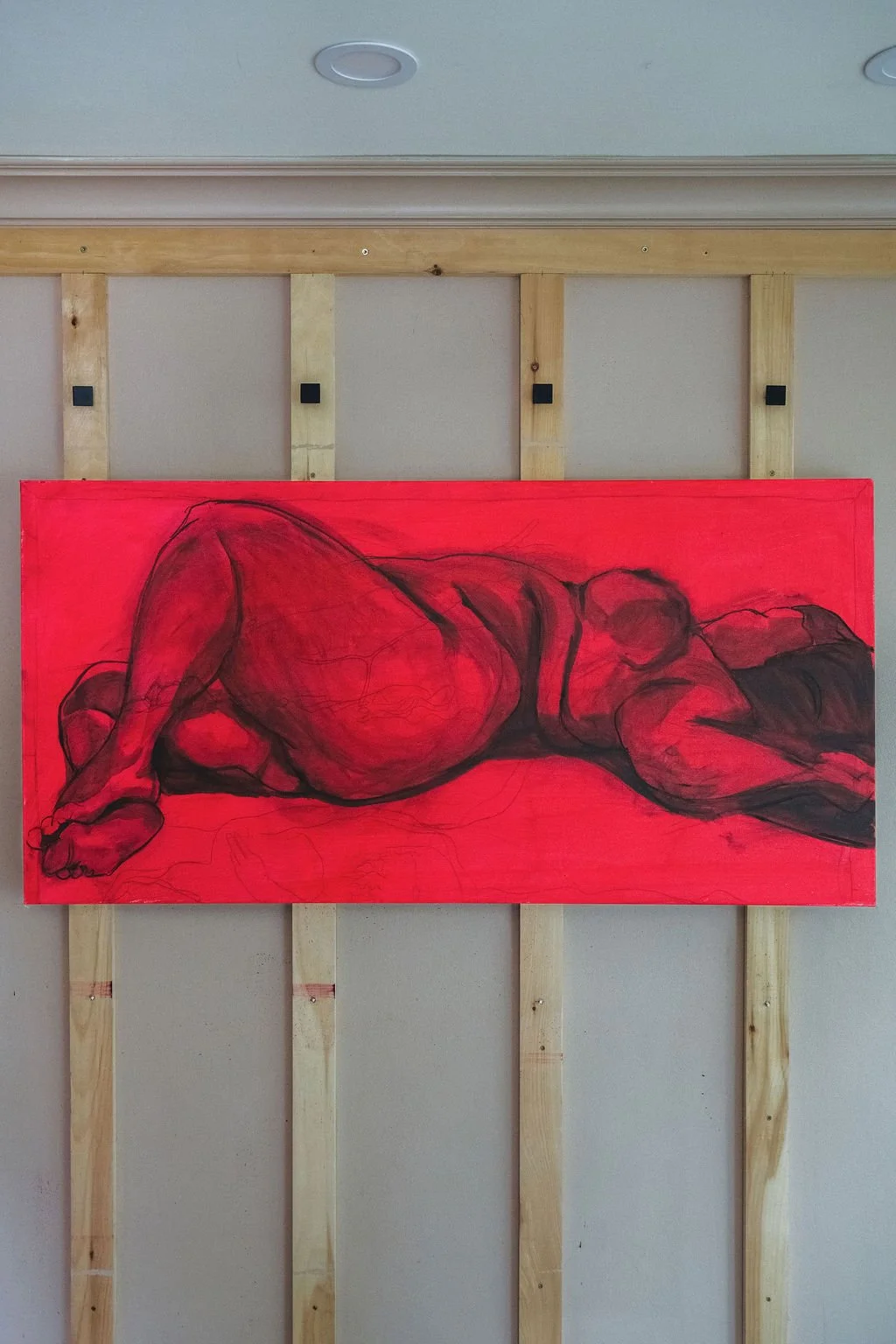
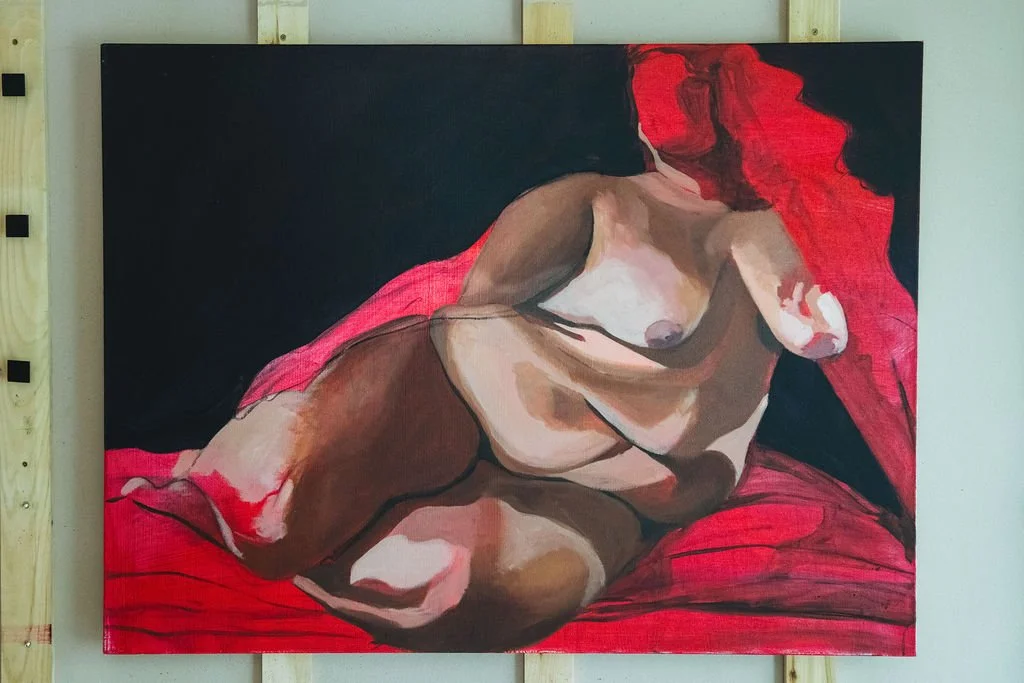
Resting Venuses explores spiritual rest as an act of healing, remembrance, and quiet defiance. These women are not asleep. They have finally laid down what has been carried for generations—the inherited fatigue, vigilance, grief, and unspoken sorrow woven into the female experience. Their stillness is not passive but sovereign. It is the sacred act of simply being.
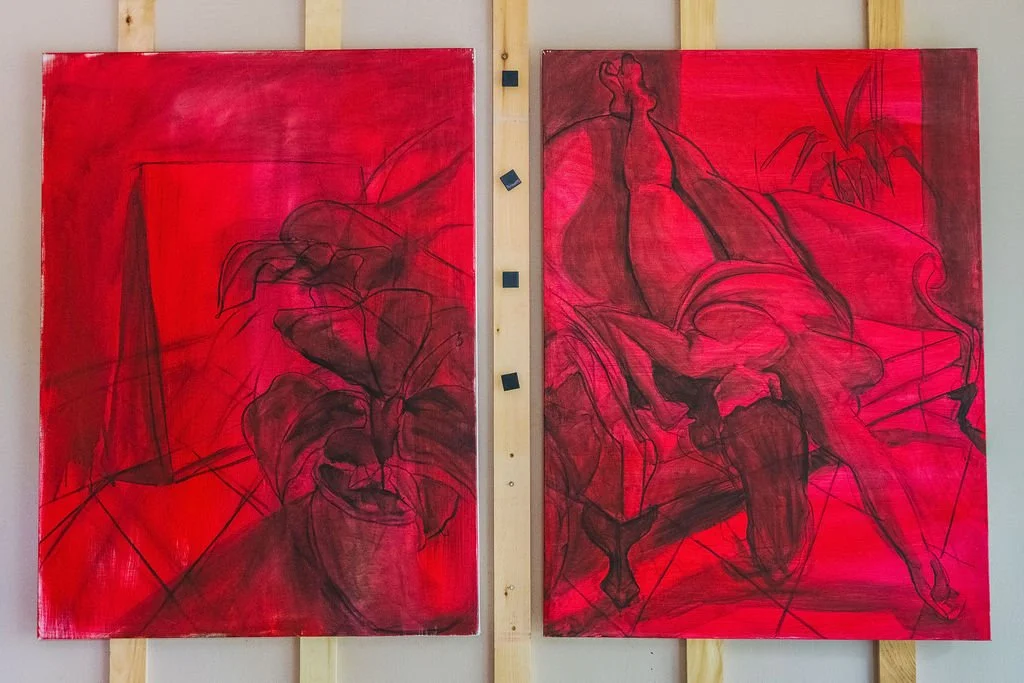
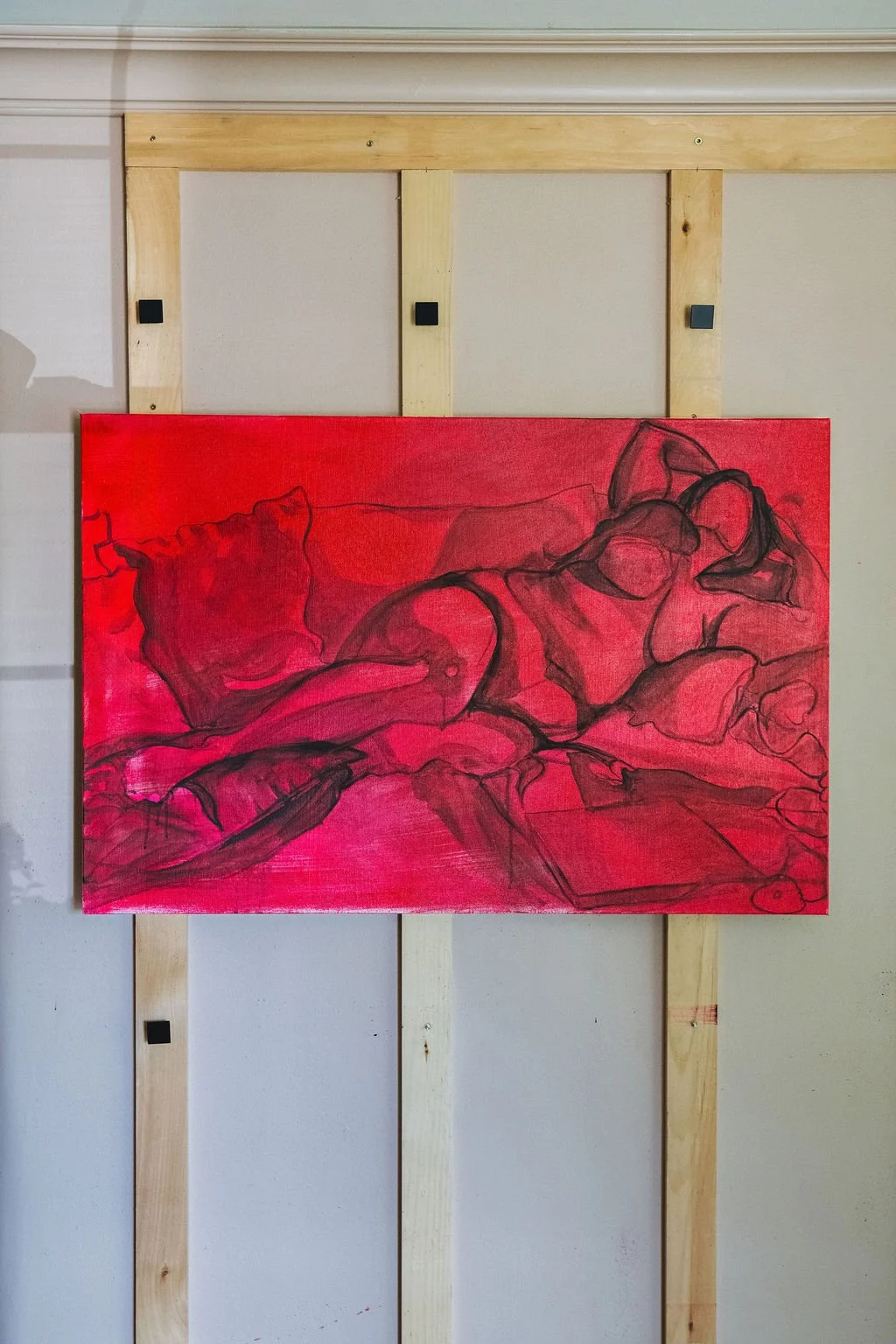
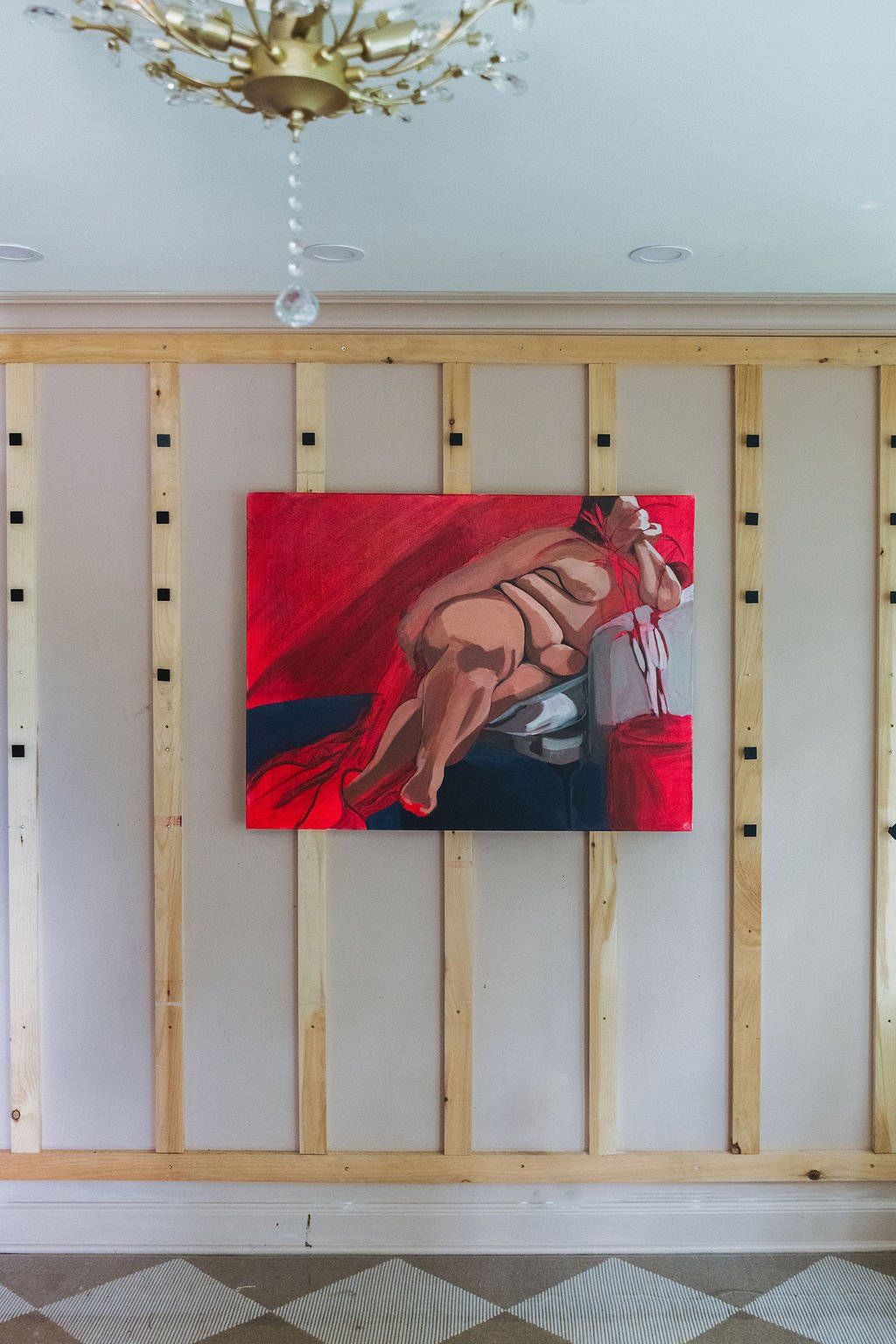
Created at the beginning of a new chapter in Elisa Valenti's life, the series marks a transformation in her visual language. While her signature faceless figures and authentic bodies remain, the exposed red underpainting—traditionally hidden beneath layers of flesh—is left exposed, becoming the finished surface. It becomes both wound and earth, memory and becoming.
Faceless yet deeply familiar, these figures invite viewers to see themselves within them. Their luminous red forms carry both the pulse of life and the ember of generational feminine rage.
These Venuses have carried the weight of centuries. At last, they set it down.
“Elisa, go deep into your cave and take us with you. ”
Years ago, I had a conversation with art critic Jerry Saltz that stayed with me long after it ended. I told him that I was both a pharmacist and a self-taught artist, a combination that fascinated him. He began talking about the ancient women who gathered herbs, created medicines, and painted on cave walls—seeing healing and image-making as deeply connected. He called me a modern cave healer, working through both medicine and art.
Then he said something I would carry with me for years: "Elisa, go deep into your cave and take us with you."
I thought about those words often. I sensed they carried something important, but I didn't yet understand what they were asking of me.
Years later, Resting Venuses began to emerge. I wasn't thinking about cave paintings or trying to follow Jerry's advice. I was simply painting. Yet something entirely new was happening. For the first time, I abandoned my familiar palette. Instead of concealing the red underpainting beneath layers of flesh tones, I allowed it to remain visible. Across that exposed ground, earthy brown figures slowly emerged.
After the paintings were complete, they sat with me in the studio for weeks. Looking at them, I began to see something I hadn't seen while making them: the brown figures against the red ground resembled ancient cave paintings.
My thoughts returned to the Paleolithic women and Venus figures that have fascinated me for years—the same ancient connection between women, image-making, ritual, and healing that had long found its way into my Venus of NY series and sculptures.
Only then did everything come together.
Jerry's words returned to me, and I realized that, without ever intending to, I had gone into my cave.
Resting Venuses is what I found there.
All the women
in my bloodline are tired
“Jerry’s words returned to me, and I realized that, without ever intending to, I had gone into my cave. Resting Venuses is what I found there.”
How much rage
have you swallowed?
“—the exposed red underpainting—traditionally hidden beneath layers of flesh—is left exposed, becoming the finished surface. It becomes both wound and earth, memory and becoming.”
Having a shadow
but not knowing it exists
“These Venuses have carried the weight of centuries. At last, they set it down.”
A field that has rested
yields a bountiful crop
“Looking at the blooming brown figures against the exposed red ground, she realized they resembled ancient cave paintings. Only then did she understand she had followed his invitation all along, drawing her back to our earliest image-makers, where painting, ritual, and healing were one.”
A scar
that has learned to smile
“Faceless yet deeply familiar, these figures invite viewers to see themselves within them. Their luminous red forms carry both the pulse of life and the ember of generational feminine rage.”
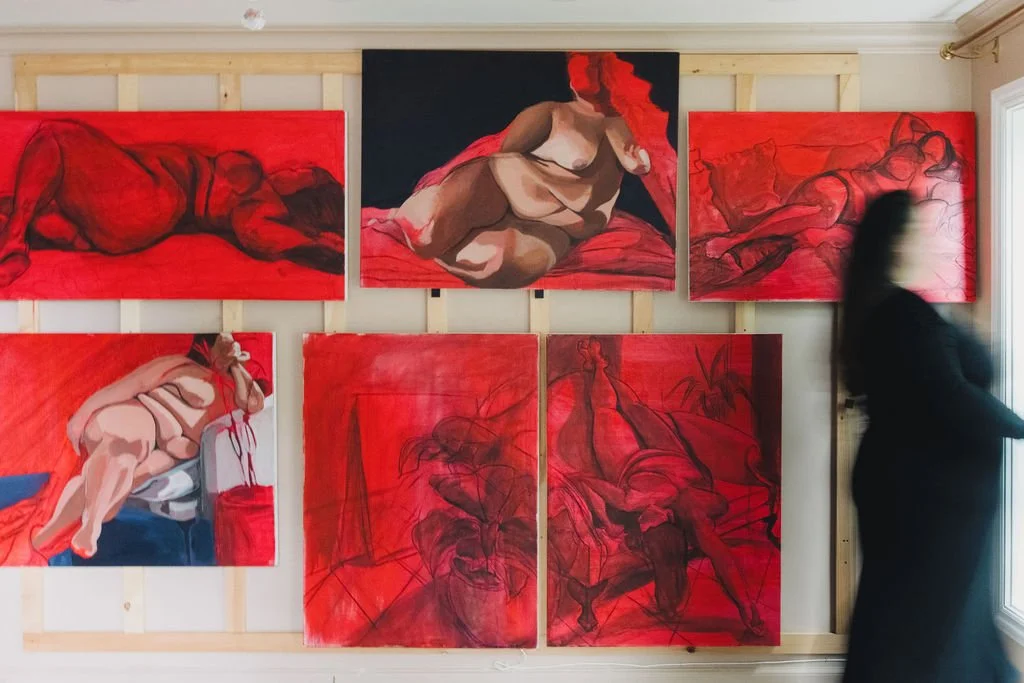
“Their stillness is not passive but sovereign. It is the sacred act of simply being.”
Note from the artist
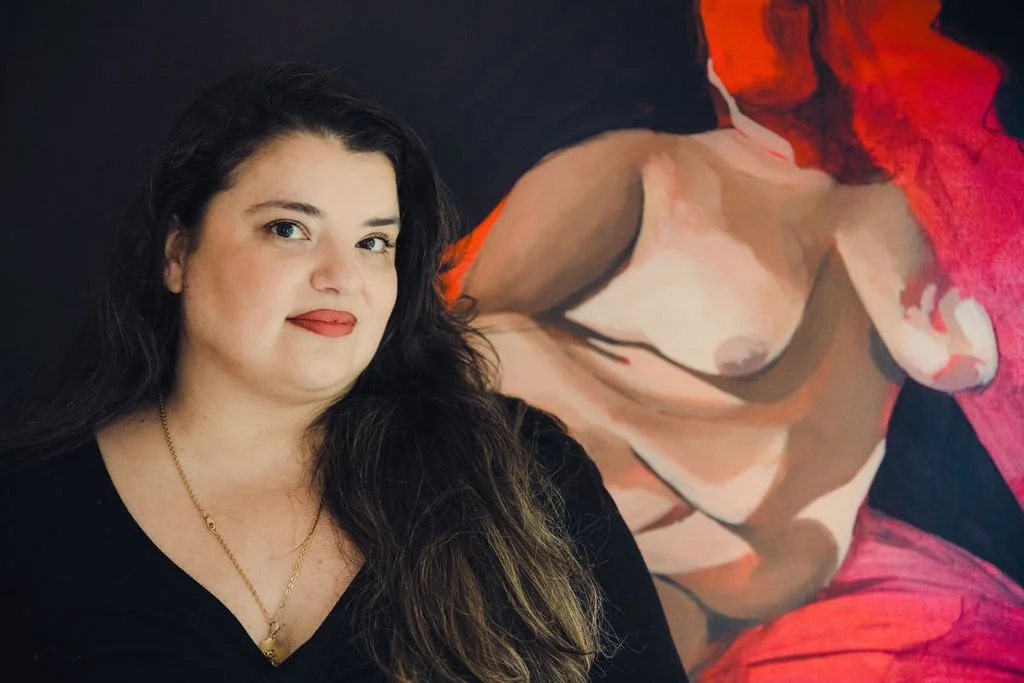
The female body has always reflected broader cultural movements. As beauty ideals shift, so do the expectations placed upon women. We have watched bodies become trends—celebrated one moment, rejected the next—while the women living inside them are asked to adapt.
In my studio, I continue painting fat women not as symbols or statements, but as people. They are resting, reflecting, and simply existing in a world that too often views them through the lens of judgment rather than humanity.
Our bodies are not trends. They are not projects to perfect or symbols of virtue. They are the homes we live our lives in.
Through Resting Venuses, I hope to create a space where every-body is met with dignity, tenderness, and quiet recognition—and where, if only for a moment, we are reminded that simply existing is enough.
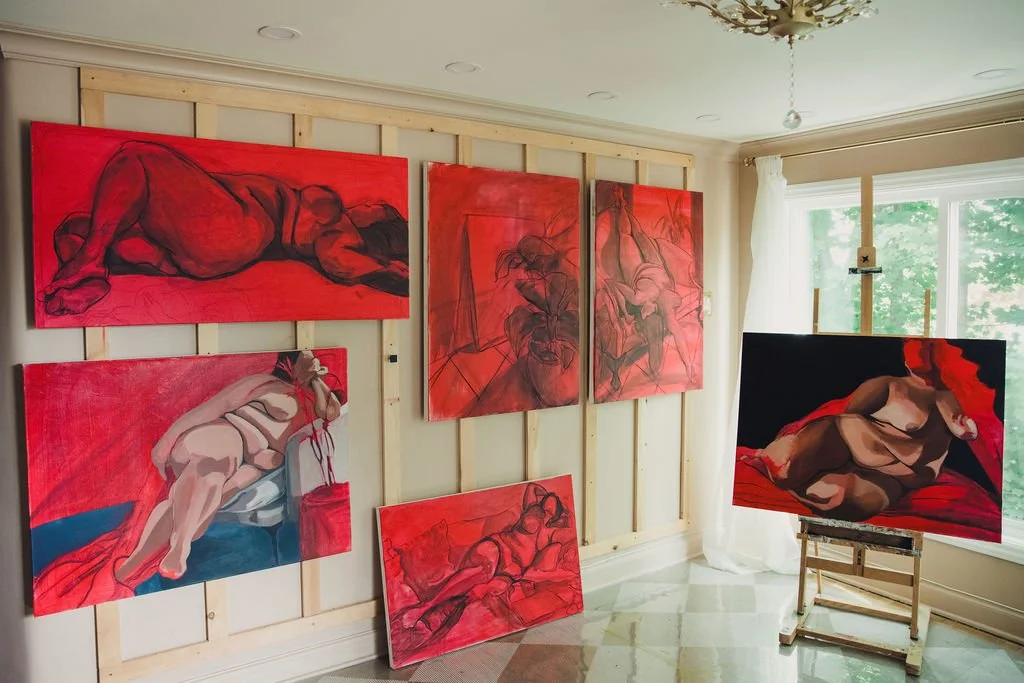
“These Venuses have carried the weight of centuries. At last, they set it down.”